HPLC Blood Test: The Test That Reads Your Haemoglobin Types
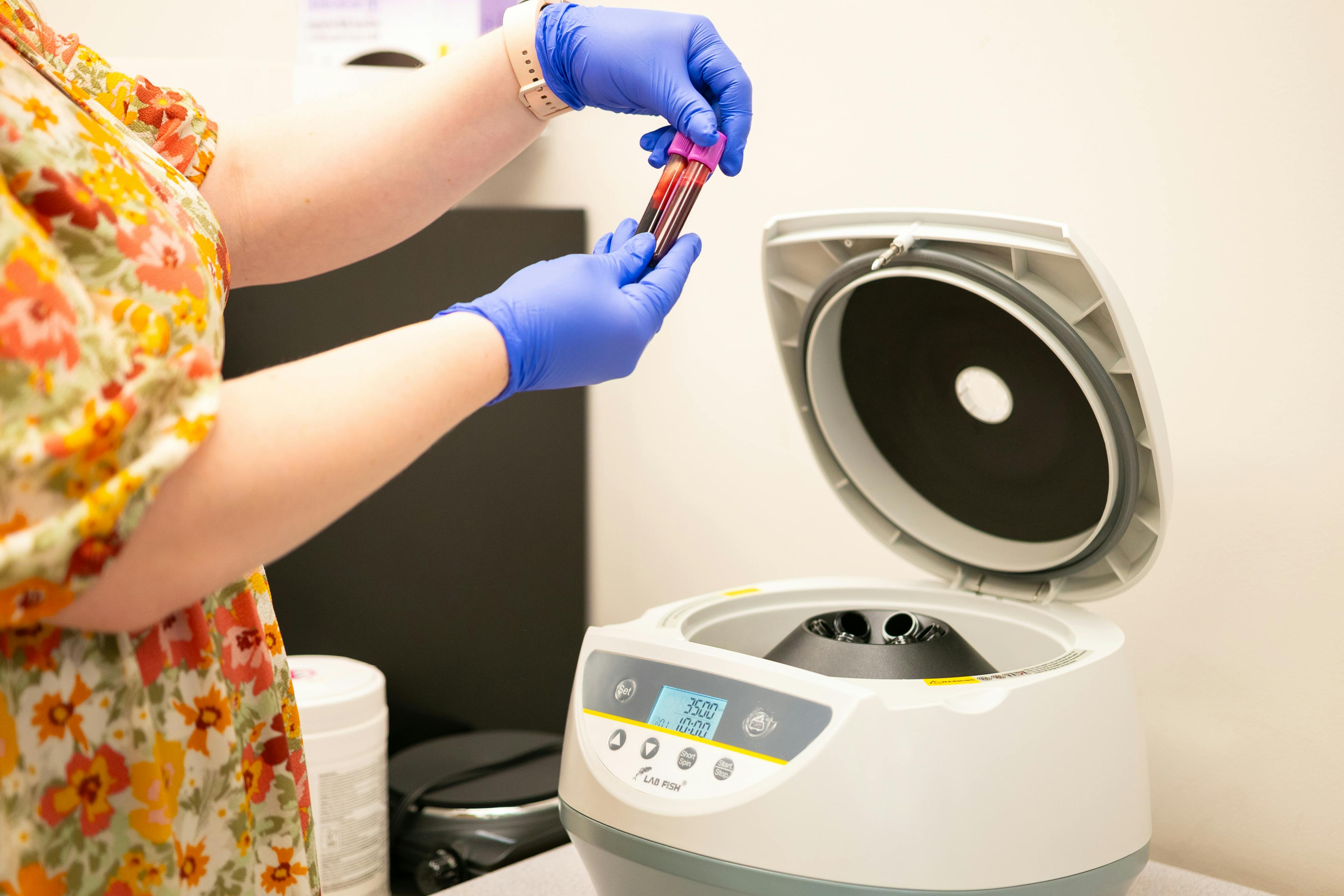
HPLC sounds like engineering, but in a blood report it answers a family question: is your low haemoglobin an ordinary iron problem, or a haemoglobin type you were born with — like thalassemia trait?
Most people meet the word HPLC when a report or prescription says "Hb HPLC" — usually after a CBC shows small red cells that iron tablets are not fixing. HPLC is not a test of how much haemoglobin you have. It is a test of which kinds you have — and that answer can change what a family does for generations.
What the machine actually does
HPLC — high-performance liquid chromatography — passes your blood sample through a column that separates haemoglobin into its types: HbA (the normal adult type), HbA2, HbF (the foetal type) and any variant like HbS (sickle) or HbE. Each type shows up as its own peak on a chart, with an exact percentage. A routine CBC counts cells; HPLC reads the haemoglobin itself. (The same separation principle, in a different mode, is what many labs use for HbA1c — the diabetes average.)
Who is advised this test
Four situations come up again and again. One: MCV is low but iron and ferritin are normal — the classic fingerprint of thalassemia trait, which iron cannot correct. Two: anaemia that runs in a family, or a known thalassemia or sickle history. Three: before marriage or before planning a pregnancy — if both partners carry beta-thalassemia trait, each child has a real chance of thalassemia major, and a simple test by both partners is how families find out in time. Four: an antenatal check where the mother's CBC pattern looks suspicious — the partner is then tested too.
Reading the headline numbers
The line doctors read first is HbA2: when it is clearly raised (typically above about 3.5%), it points to beta-thalassemia trait. HbF runs high in some thalassemias and in babies. A variant peak — S, E, D — means a haemoglobin type is present that deserves a doctor's explanation, because trait (one copy) is usually a healthy carrier state while disease (two copies) is a different story. Percentages vary a little by method, so the printed interpretation on your report, read with your CBC and ferritin, is what counts — trait is a pattern diagnosis, not a single number.
At our centre the Haemoglobin HPLC runs on samples taken daily in the morning, with the report the same day — and home collection is free. If your CBC keeps showing small red cells or there is a family history, WhatsApp your report to +91 9451155402; we will tell you whether HPLC is the right next step for you — and, before a wedding or a pregnancy, for both partners.